

When an electronic unit fails, an engineer usually has two paths: order a new board from the manufacturer, or repair the existing one. Replacement looks simpler at first glance, but repairing industrial electronics almost always costs less, and the difference shows up in more than the price of the part. It shows up in lead times, in line downtime, and in whether the plant will still have access to spares five years from now.
Why replacement costs more than it seems
The price of a new board is only the tip of the expense. Add the lead time, which for discontinued models stretches into weeks and months. All that time the equipment sits idle, and an hour of industrial downtime often exceeds the price of the board itself many times over.
There is also a hidden part of the equation: a new board is not always identical to the old one. The manufacturer may have changed the revision, the firmware, or the connectors, and then installation requires extra commissioning. With component-level repair you return the very same board with proven compatibility, instead of fighting mismatches introduced by a newer revision.
Repairing electric train electronics takes days rather than months, because the fault is almost always traceable to one or two components rather than the whole board. Swapping the entire module abandons that logic: you pay for hundreds of healthy parts just to replace the one that failed.
Component repair vs module swap
The difference between the two approaches is fundamental. A module swap is a blunt method: the faulty assembly is discarded in full, together with its healthy parts. Component-level repair is a targeted intervention: diagnostics locate the specific failed element (a capacitor, transistor, driver, or chip), and only that element is replaced.
Fault localization runs on specialized equipment. Instruments like BoardMaster compare the analog signature of each node against a reference, which lets you find a defect without a schematic. Thermal imaging under load reveals overheated parts before they fail outright. We describe how this works in practice in a separate piece on fault localization with BoardMaster.
The component approach is especially valuable where the board is unique: marine automation, metro equipment, CNC controllers. For units like these no new equivalent exists, so the choice is not between repair and replacement, but between repair and scrapping the entire installation.
The economics and total cost of ownership
The cost of restoring, repairing and returning electronics to service is often under 15% of the price of new equipment. That is not a marketing figure but a typical outcome of diagnostic repair, where the expense comes down to a few components and an engineer’s time rather than the purchase of a whole unit.
It is more accurate to weigh total cost of ownership (TCO) rather than a one-off price. TCO includes the part, shipping, commissioning, downtime, staff training, and the risk of incompatibility. Component-level repair wins on nearly every line: a short turnaround, no downtime waiting for delivery, and a preserved, proven configuration.
The difference is especially visible in industries with expensive, discontinued electronics: oil and gas equipment, rail transport, and marine systems. We break down a detailed comparison of the two approaches in our article on component repair versus module swap.
Reliability after repair: not worse, sometimes better
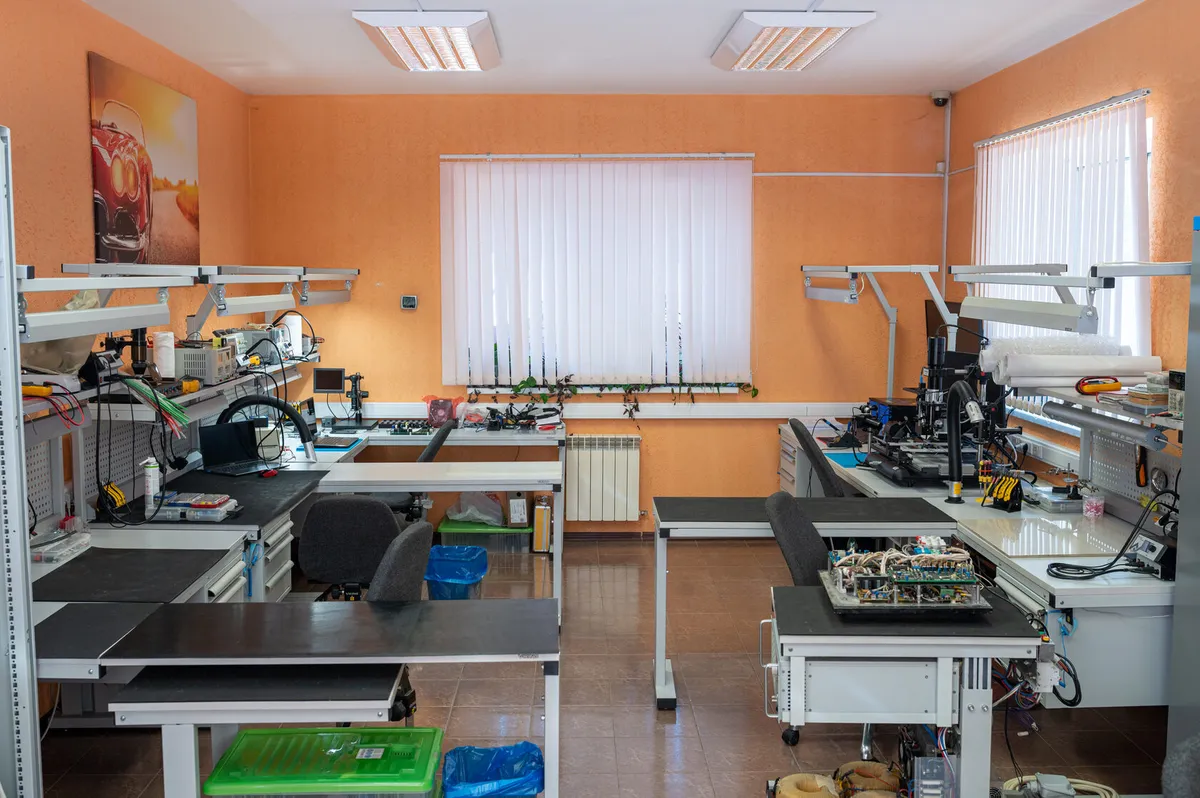
A common objection goes like this: a repaired board is less reliable than a new one. In practice the opposite is true, provided the repair meets standards. Soldering is inspected against IPC-A-610 acceptability criteria, conductor and plated-through-hole repair follows IPC-7711/7721, and all work is done at antistatic workstations under ESD controls. Electrostatic discharge is one of the frequent hidden causes of failure, and guarding against it during repair builds in reliability for years to come.
A repaired assembly goes through acceptance testing. We run the board under load (burn-in), perform thermal cycling, log parameters before and after, and estimate the expected mean time between failures. The notorious infant mortality of electronics, the early failures in the first hours of operation, is caught precisely at this stage. We describe how this check is structured in our piece on post-repair burn-in.
For boards operating in humid or aggressive environments we additionally apply a conformal coating. We back a restored unit with a warranty: when the repair is done well, standing behind the result is not hard.
Sustainability as a side effect
Repair has a dimension beyond cost. Every restored board is one that does not end up in a landfill. The world generates more than 50 million tonnes of electronic waste every year, and industrial electronics, with its heavy components, contributes noticeably to that figure.
The disposal of industrial electronics deserves its own conversation, and we devoted a separate article to it. The habit of repairing instead of replacing becomes, year after year, not merely economical but necessary. You can read why we see this as a strategic direction on our company philosophy page.
When repair is not an option
Honesty requires admitting that repair is not always justified. Replacement makes sense when the board is physically destroyed, when there is no access to components or documentation at all, and in cases where functional safety is critical and only a certified new unit will do. But in our experience such situations are the minority.
In the vast majority of requests for automotive electronics and CNC equipment, the cause of failure comes down to a specific worn-out or overheated component that is replaced individually. Before writing off a unit, it is worth spending an hour on diagnostics: it costs almost nothing compared with buying new equipment.
If you have equipment for which the manufacturer only offers full replacement, request a diagnostics quote. We will inspect the board, give you an honest assessment of its repairability and an estimate, and in many cases restoration will turn out considerably cheaper than replacement.