

Modern industry runs on circuit boards. They control transport, production equipment, ships, drilling rigs, they are effectively the brain of most industrial systems. That is exactly why the volume of industrial e-waste keeps growing so fast, and why the cost of a wrong decision, scrapping a board instead of diagnosing and repairing it, keeps rising alongside it.
The core problem is that a large share of discarded boards was technically repairable. A single component failed, yet an entire assembly worth tens or even hundreds of thousands went to the scrap pile. Component-level repair flips that logic: instead of swapping a whole unit, the specific faulty element is restored.
The scale of the e-waste problem
International estimates put global electronic waste at more than 50 million tonnes a year, and the industrial segment is far from a minor contributor. A significant share of that volume is boards that were repairable but got written off as unrepairable without proper diagnostics.
The reason is usually simple: replacing a faulty board with a new one feels faster and safer than digging into the root cause of the failure. In reality, the time and cost difference is almost always in favor of repair, especially when the board relies on legacy parts that are no longer available in any new product.
A separate difficulty is discontinued components. Equipment that has run for ten years or more is often built on chips and transistors that reached EOL (end of life) or obsolete status long ago. The manufacturer of a replacement unit may no longer exist, while a compatible part sourced from stock or a trusted supplier costs a fraction of a full system replacement.
Why boards get thrown away instead of fixed
There are a few recurring reasons why essentially serviceable boards end up in the bin.
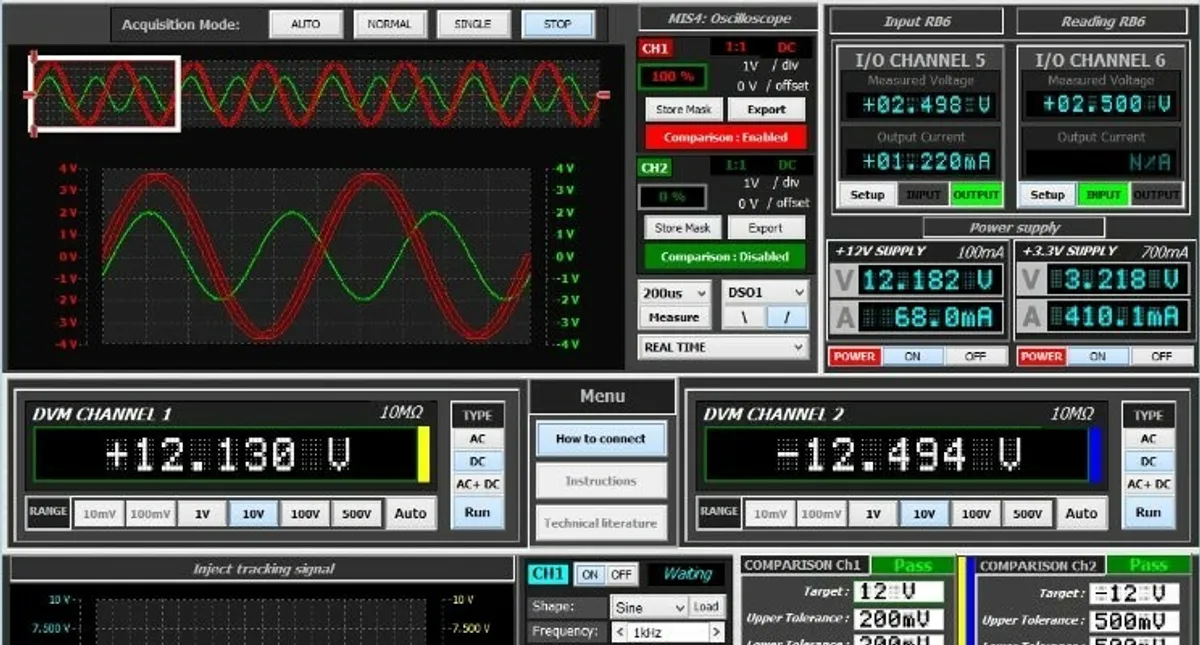
First, the lack of proper diagnostic equipment on site. Without tools like BoardMaster, locating a fault with an oscilloscope and a multimeter can take days instead of seconds, so it feels easier to order a new unit.
Second, the false belief that a repaired system cannot be as reliable as a new one. In practice, a board that has gone through full diagnostics after repair and a burn-in test is no less reliable than a new one, and often more so, because the weak point has already been found and eliminated.
Third, some original equipment manufacturers’ policies that directly or indirectly restrict third-party repair. The absence of schematics and documentation artificially pushes the customer toward buying new.
The economics of repair versus replacement
The difference between repair and replacement shows up in three dimensions: money, time, and predictability.
On money, component-level repair usually costs a small fraction of a new unit. A specific element is replaced rather than the whole assembly, so the invoice reflects the cost of parts and labor, not the price of a finished product with the manufacturer’s margin.
On time, restoring a board is often faster than delivering a new unit, especially when the original is discontinued and takes weeks to source. For a ship in port or a drilling rig, every day of downtime is a direct loss, so repair speed frequently matters more than the repair cost itself.
On predictability, sound diagnostics reveal why the board failed. If the cause is voltage spikes or overheating, it can be addressed at the system level, rather than waiting for the new unit to travel the same path to failure.
Repair as part of a circular economy
We see major industry players shifting their approach. The rail transport sector is a good example, where repairing boards on site instead of full replacement delivers noticeable savings at the enterprise level. The same logic applies to electric train electronics and metro equipment, where boards are often discontinued long before they physically wear out.
The same principle holds in marine electronics, where replacing a board means the vessel sits idle while the part is shipped, and in oil and gas equipment, where a single day of rig downtime costs hundreds of thousands of dollars. In all of these cases, repair is not only a saving but also a smaller volume of e-waste sent to recycling before its time.
How quality repair is done
Extending the life cycle of equipment only works when standards are respected. Simply resoldering a component is not enough, the board has to return to service with a guarantee of reliability.
We work to recognized industry norms. Acceptance criteria for solder joints and assembly come from IPC-A-610, while the repair and rework procedures themselves come from IPC-7711 and IPC-7721. Work is carried out under electrostatic discharge protection (ESD), because a static discharge can quietly damage sensitive industrial electronics before the board ever reaches the instrument.
A separate stage is protecting the restored board against its operating environment. Conformal coating shields traces and components from moisture, salt fog, and vibration, which matters especially for marine and transport equipment. A final burn-in test under load confirms that the board holds its operating mode, rather than merely powering up on the bench.
How to tell whether a board can be saved
Not every failure spells the end of a board’s life, and in most cases the verdict can only be reached after diagnostics, not by eye. There are a few practical guidelines.
A local failure of one node, such as a punched-through power converter or a burned-out input protector, is almost always repairable. Such faults are localized instrumentally and eliminated by replacing specific components without touching the rest of the circuit.
Even boards with visible signs of corrosion, charring, or mechanical damage can often be restored, provided the substrate and most of the conductive pattern are intact. Traces and pads are rebuilt, connectors are replaced, and affected areas are cleaned and re-protected with coating.
It is harder with multilayer boards where an inner layer is damaged, and with fully burned areas that reached critical circuits. But even here the decision follows diagnostics: sometimes it is cheaper and faster to restore the board than to wait weeks for a discontinued unit. That is exactly why diagnostics before the write-off, not after, saves both money and time.
Where repair pays off most
The economics of repair are most visible where equipment downtime is expensive and the component base is dated. Beyond rail transport and ships, this covers industrial controllers and CNC, where the failure of one board halts an entire production line, and automotive electronics, where original control units are costly and not always available. The logic is the same: the more complex and expensive the assembly and the longer its lead time, the more repair pays off compared with replacement.
What you can do right now
If your facility has a habit of writing off faulty boards without diagnostics, that almost always means overpaying for new equipment and generating extra electronic waste. The first step is running diagnostics before the write-off decision, not after.
We cover this in more detail in our article on the philosophy of repair instead of replace, and we also show, using concrete numbers, how board repair compares with module replacement. If you have equipment that seems beyond repair, we are ready to diagnose it, submit a request to find out whether it can be restored.